Archive for the ‘Linux Solution’ Category
Proxmox Datacenter Manager 1.1 – has landed and it may be the most important PDM release yet
Freitag, Juni 5th, 2026Pulse – ist ein leichtgewichtiges echtzeitfähiges Dashboard zur Überwachung von Proxmox Systemen
Mittwoch, Juni 3rd, 2026Proxmox Virtual Environment (VE) 9.2.3 – seven new features
Freitag, Mai 29th, 2026Proxmox Datacenter Manager (PDM) 1.1 – introduces automation capabilities alongside multi cluster subscription lifecycle management
Donnerstag, Mai 28th, 2026Proxmox Virtual Environment (VE) 9.2.2 – ein Software Definiertes Netzwerk (SDN) beschreibt eine Architektur mit dem Ziel die Netzwerksteuerung zu vereinfachen und zu verbessern
Samstag, Mai 23rd, 2026Linux Tipp #85 – die Einführung in Podman Compose
Samstag, Mai 23rd, 2026Proxmox Virtual Environment (VE) 9.2.2 – these are 5 Proxmox fixes and optimizations that are absolutely worth doing this weekend
Freitag, Mai 22nd, 2026Proxmox Virtual Environment (VE) 9.2 – this release debuts a Dynamic Load Balancer for real time cluster resource scheduling and automated high availability (HA) migrations
Donnerstag, Mai 21st, 2026Ubuntu Core 26 LTS – is the latest version of Ubuntu for deployment on embedded devices and edge systems
Donnerstag, Mai 21st, 2026
Uptime Kuma 2.x – it is a major version update it contains some breaking changes
Samstag, Mai 16th, 2026Security Vulnerabilities Linux CVE-2026-46300 ‚Fragnesia‘ – vulnerability enables Linux root privilege escalation across cloud environments
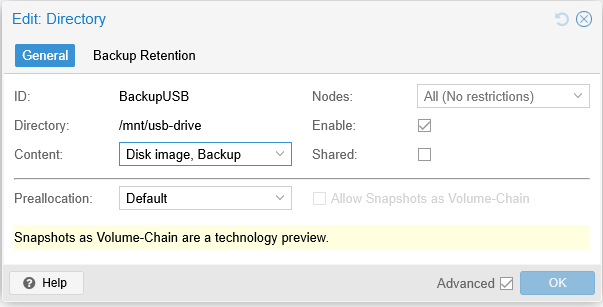
Donnerstag, Mai 14th, 2026Proxmox Virtual Environment (VE) 9.1.9 – Mounting a USB Drive to Restore a Proxmox VM from an Older Backup on a New System
Dienstag, Mai 12th, 2026root@pve-s740-03:/mnt# lsblk
NAME MAJ:MIN RM SIZE RO TYPE MOUNTPOINTS
sda 8:0 0 223.6G 0 disk
├─SSD–LVM–ThinPool-SSD–LVM–ThinPool_tmeta 252:0 0 2.2G 0 lvm
│ └─SSD–LVM–ThinPool-SSD–LVM–ThinPool-tpool 252:2 0 219G 0 lvm
│ └─SSD–LVM–ThinPool-SSD–LVM–ThinPool 252:3 0 219G 1 lvm
└─SSD–LVM–ThinPool-SSD–LVM–ThinPool_tdata 252:1 0 219G 0 lvm
└─SSD–LVM–ThinPool-SSD–LVM–ThinPool-tpool 252:2 0 219G 0 lvm
└─SSD–LVM–ThinPool-SSD–LVM–ThinPool 252:3 0 219G 1 lvm
sdb 8:16 0 465.8G 0 disk
└─sdb1 8:17 0 465.8G 0 part
sdc 8:32 1 57.3G 0 disk
├─sdc1 8:33 1 1007K 0 part
├─sdc2 8:34 1 512M 0 part /boot/efi
└─sdc3 8:35 1 56.8G 0 part
├─pve-swap 252:4 0 7G 0 lvm [SWAP]
├─pve-root 252:5 0 24.4G 0 lvm /
├─pve-data_tmeta 252:6 0 1G 0 lvm
│ └─pve-data 252:8 0 16.3G 0 lvm
└─pve-data_tdata 252:7 0 16.3G 0 lvm
└─pve-data 252:8 0 16.3G 0 lvm
root@pve-s740-03:~# ls -l /dev/disk/by-uuid/*
lrwxrwxrwx 1 root root 10 May 12 16:34 /dev/disk/by-uuid/0c8f5e4d-c4b5-4598-a3ce-017b3d560ef4 -> ../../dm-5
lrwxrwxrwx 1 root root 10 May 12 16:34 /dev/disk/by-uuid/b17f8e4e-22f2-42e5-9f69-42a4de807ad7 -> ../../dm-4
lrwxrwxrwx 1 root root 10 May 12 16:34 /dev/disk/by-uuid/BC04-4362 -> ../../sdc2
lrwxrwxrwx 1 root root 10 May 12 16:34 /dev/disk/by-uuid/dd0e892f-fd9e-414b-b759-a83caf14ed64 -> ../../sdb1
root@pve-s740-03:/etc# vi fstab
root@pve-s740-03:~# vi /etc/fstab
…
/dev/disk/by-uuid/dd0e892f-fd9e-414b-b759-a83caf14ed64 /mnt/usb-drive ext4 defaults 0
root@pve-s740-03:~# mkdir /mnt/usb-drive
root@pve-s740-03:~# mount -a
root@pve-s740-03:~# df -k
Filesystem 1K-blocks Used Available Use% Mounted on
udev 8023596 0 8023596 0% /dev
tmpfs 1614136 1484 1612652 1% /run
/dev/mapper/pve-root 25058324 4029460 19730640 17% /
tmpfs 8070672 46800 8023872 1% /dev/shm
efivarfs 128 104 20 84% /sys/firmware/efi/efivars
tmpfs 5120 0 5120 0% /run/lock
tmpfs 1024 0 1024 0% /run/credentials/systemd-journald.service
tmpfs 8070676 0 8070676 0% /tmp
/dev/sdc2 523248 8976 514272 2% /boot/efi
/dev/fuse 131072 16 131056 1% /etc/pve
tmpfs 1024 0 1024 0% /run/credentials/getty@tty1.service
tmpfs 1614132 4 1614128 1% /run/user/0
/dev/sdb1 479596204 99068688 356091856 22% /mnt/usb-drive
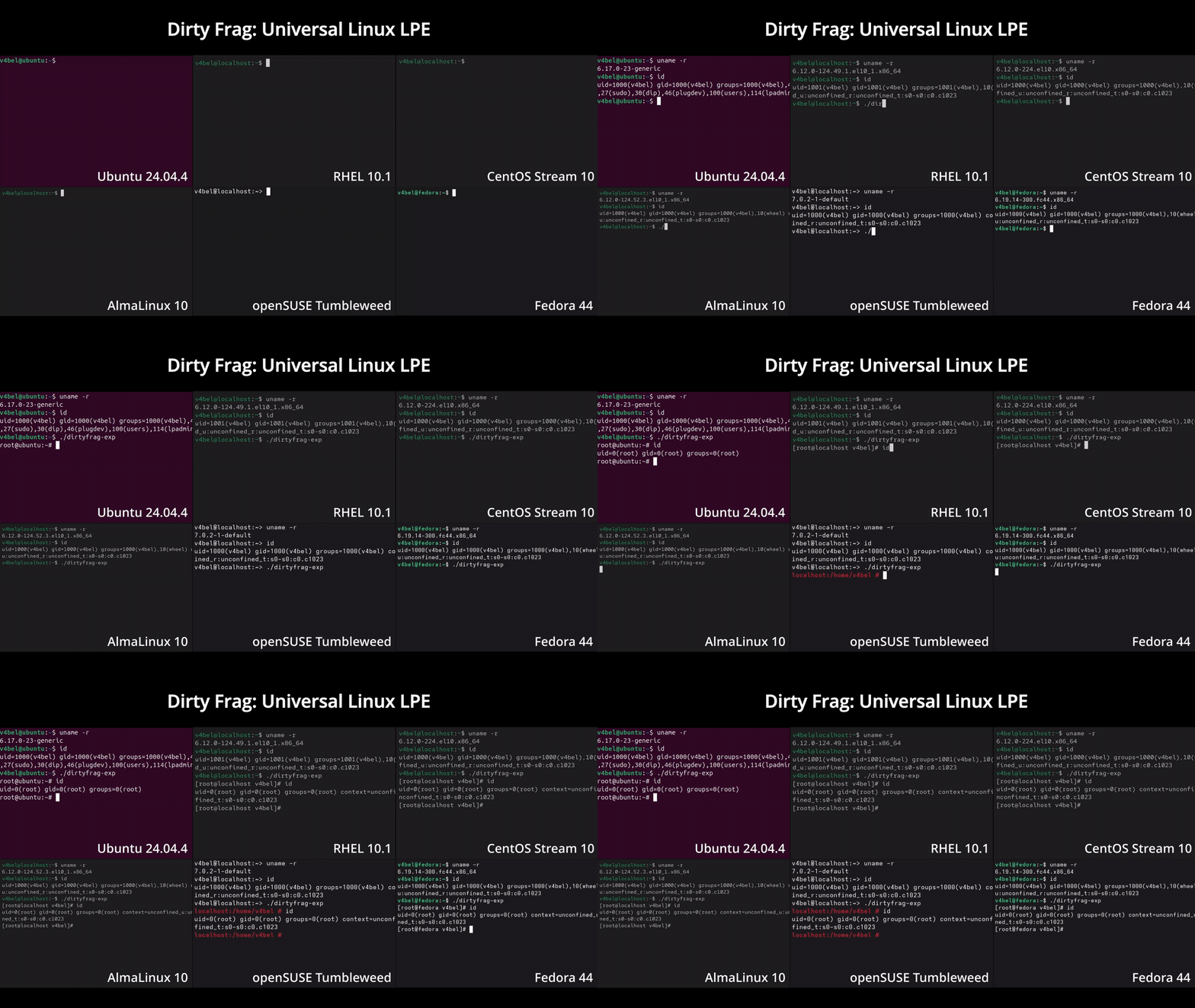
Security Vulnerabilities Linux CVE-2026-31431 CVE-2026-43284 CVE-2026-43500 ‚Copy Fail‘ ‚Dirty Frag‘ and more – vulnerability enables Linux root privilege escalation across cloud environments
Samstag, Mai 9th, 2026Now this scenario appears to be repeating itself in a similar fashion with yet another security vulnerability we are referring to ‚Dirty Frag‘ or rather ‚Copy Fail 2‘