Archive for the ‘N8N’ Category
Open WebUI v0.8.5 & AI Workflow Automation N8N 2.8.3 – so kannst du in einer Open WebUI Session direkt mit deinen n8n AI Agenten arbeiten
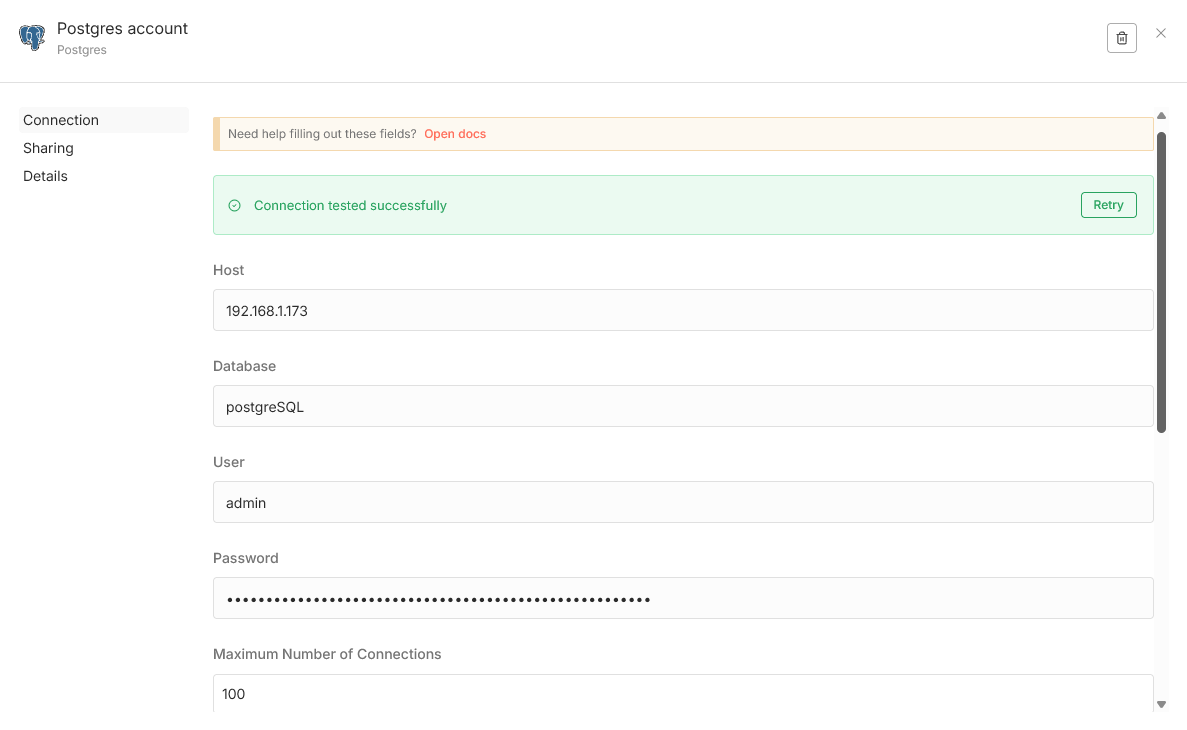
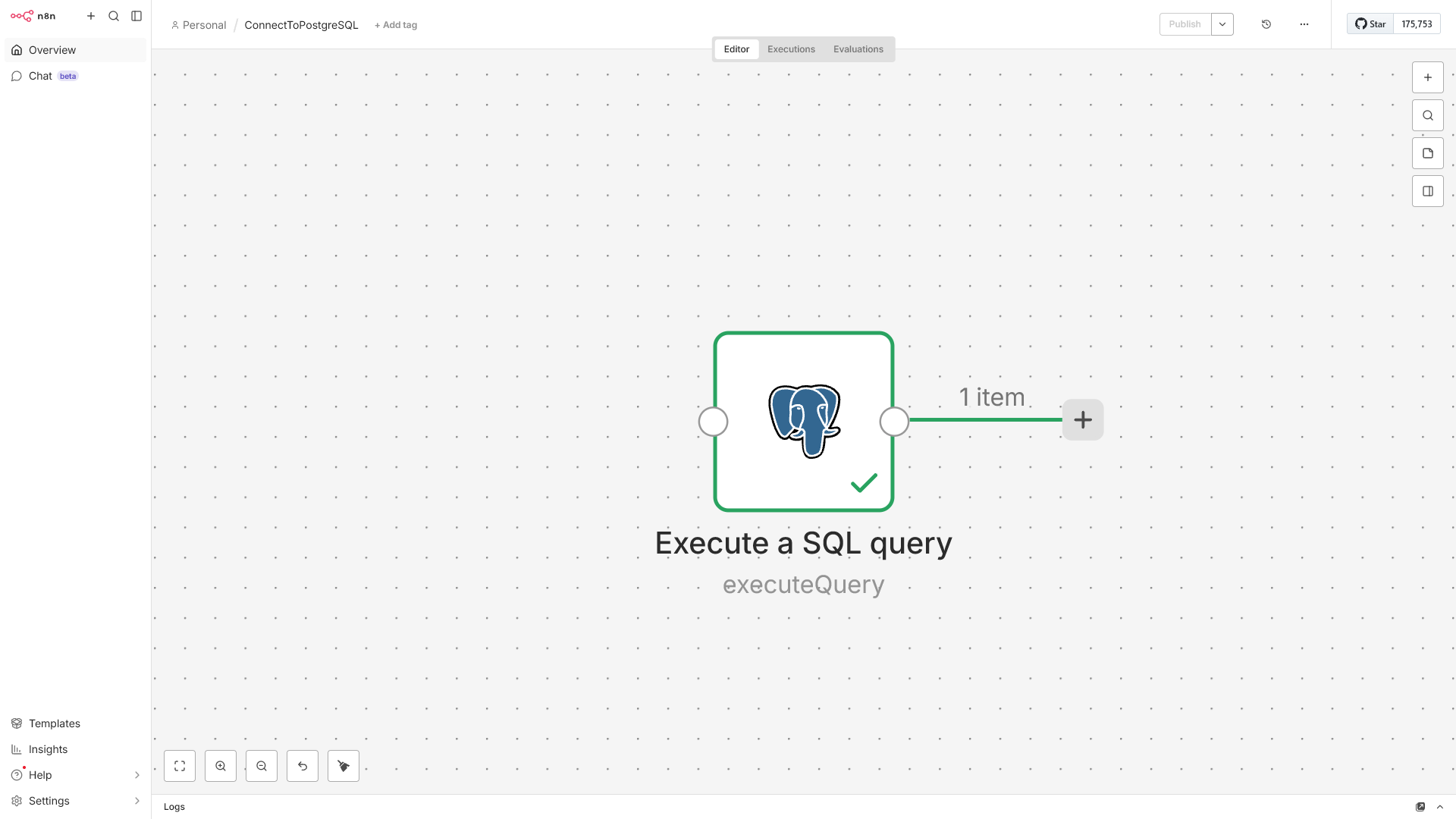
Dienstag, Februar 24th, 2026AI Workflow Automation N8N 2.8.3 – how to create workflows that connect to PostgreSQL databases
Sonntag, Februar 22nd, 2026
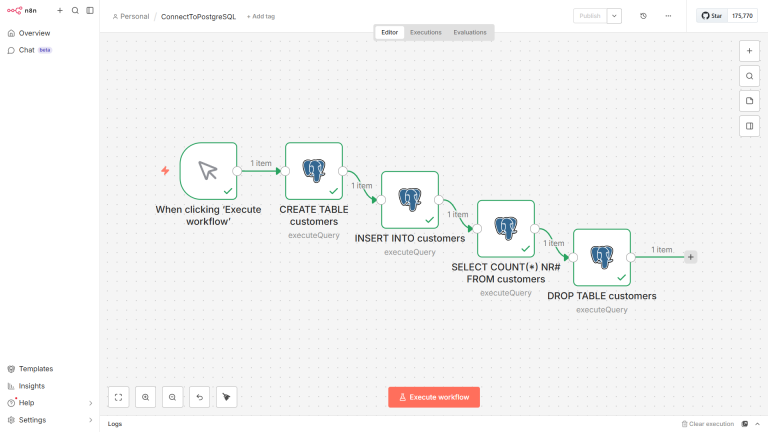
CREATE TABLE customers (ID SERIAL PRIMARY KEY,
Name VARCHAR(50) NOT NULL,
Stadt VARCHAR(50),
Adresse VARCHAR(255)
);
INSERT INTO customers ( NAME, STADT, ADRESSE)
VALUES ( ‚Schulz‘, ‚Berlin‘, ‚Hauptstrasse 1‘);
SELECT * FROM customers;
DELETE FROM customers;
DROP TABLE customers;
Claude Code + n8n – komplette Apps & Workflows in Minuten bauen lassen
Samstag, Februar 21st, 2026AI Workflow Automation N8N 2.8.3 – how to analyse and summarize RSS feeds in conjunction with webhook(s) and using Ollama and LLM Ministral-3:14b
Freitag, Februar 20th, 2026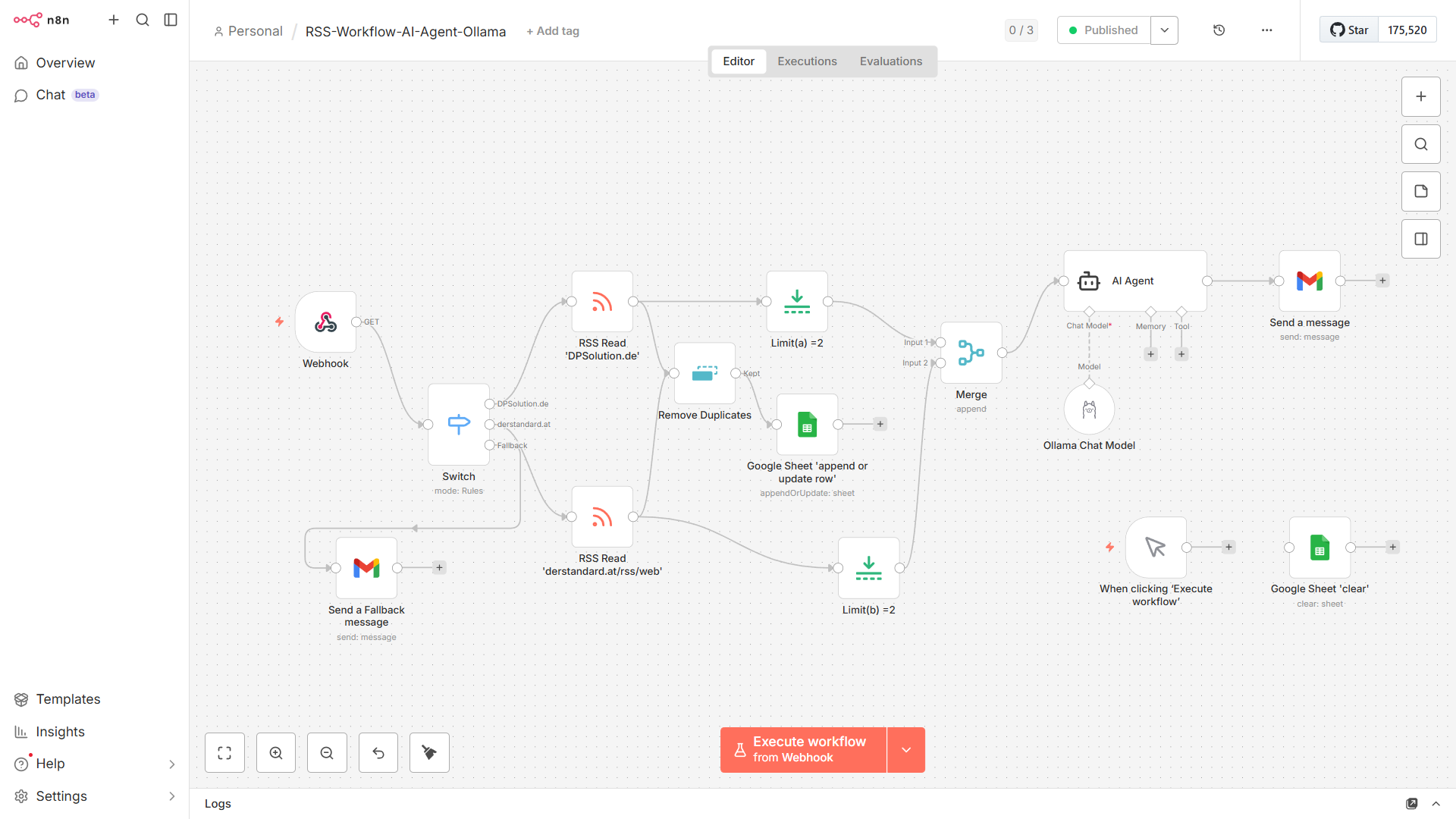
AI Workflow Automation N8N 2.8.3 – wie Workflows in eine komplette benutzerfreundliche Web App verwandelt werden können
Freitag, Februar 20th, 2026AI Workflow Automation N8N 2.8.3 – jetzt mit einer nativen Datenbank
Donnerstag, Februar 19th, 2026AI Workflow Automation N8N 2.8.3 – Edit Fields Set Node & Merge Node
Mittwoch, Februar 18th, 2026AI Workflow Automation N8N 2.8.3 – how to leverage RSS feeds
Montag, Februar 16th, 2026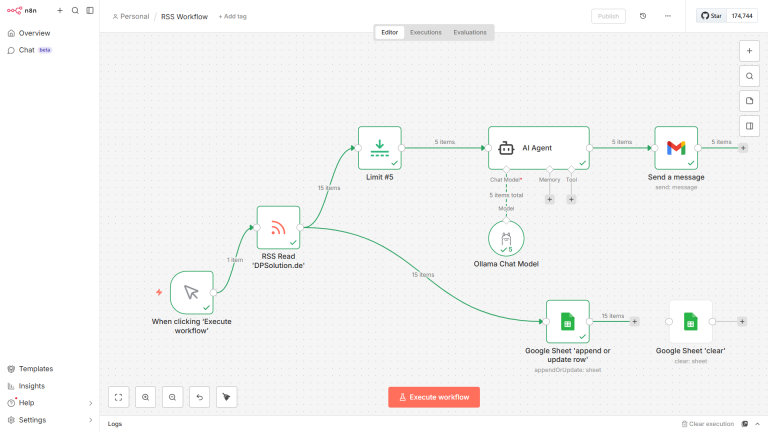
Example … Input
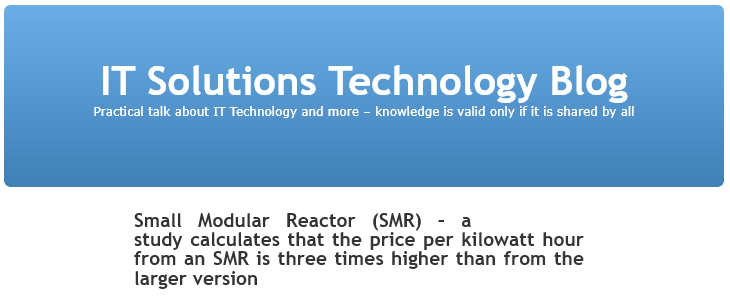
Example … Output
Here’s a concise summary of **Small Modular Reactors (SMRs)** and the cost comparison study you mentioned:
### **What is a Small Modular Reactor (SMR)?**
– **Definition**: SMRs are advanced nuclear reactors designed to be **smaller (typically <300 MW), modular (built in factories), and scalable** compared to traditional large reactors (1,000+ MW).
– **Key Features**:
– **Modularity**: Components can be prefabricated and assembled on-site, reducing construction time and costs.
– **Flexibility**: Can be deployed in pairs or clusters to meet varying energy demands.
– **Safety**: Often designed with passive safety systems to minimize risks.
– **Applications**: Used for electricity generation, district heating, desalination, or industrial processes.
– **Examples**: NuScale (U.S.), TerraPower (Bill Gates-backed), and Russian designs like RITM-200.
### **Cost Comparison Study**
– A **2023 study** (likely from organizations like the **IAEA, OECD/NEA, or MIT**) found that:
– **SMRs have a higher **levelized cost of energy (LCOE)**—around **3x more expensive per kWh** than large conventional reactors**.
– **Reasons for higher costs**:
– **Economies of scale**: Large reactors benefit from bulk production and lower per-unit costs.
– **Regulatory and licensing hurdles**: SMRs face new safety reviews, delaying deployment.
– **Limited deployment history**: Few commercial SMRs are operational yet (most are in pilot phases).
– **Supply chain challenges**: New manufacturing processes may increase costs.
– **Estimated LCOE**:
– **Large reactors**: ~$50–$100/MWh (varies by region).
– **SMRs**: ~$150–$300/MWh (depending on design and scale).
### **Why Pursue SMRs Despite Higher Costs?**
1. **Flexibility**: Can be deployed in remote areas or paired with renewables for grid stability.
2. **Safety & Public Acceptance**: Smaller size may reduce public opposition compared to large plants.
3. **Future Potential**: Costs could drop with mass production (like solar/wind initially).
4. **Decarbonization**: Provide **carbon-free baseload power**, complementing intermittent renewables.
5. **Export Opportunities**: Modular designs are easier to transport and deploy globally.
### **Current Status (as of 2026)**
– **Few commercial SMRs are operational** (most are in advanced testing phases).
– **Government support**: Many countries (U.S., UK, Canada, China) are investing in SMR R&D to accelerate deployment.
– **Challenges**: High upfront costs, regulatory delays, and competition from renewables + storage.
### **Key Takeaways**
– **SMRs are not yet cost-competitive** with large reactors or renewables in most markets.
– **Long-term viability depends on**:
AI Workflow Automation N8N 2.6.4 – Loop Over Items
Sonntag, Februar 15th, 2026AI Workflow Automation N8N 2.6.4 – auto format documents into JSON for Vector Database an easy RAG AI automation
Freitag, Februar 13th, 2026AI Workflow Automation N8N 2.6.4 – the n8n IF Node and SWITCH Node with Multiple Data Items
Freitag, Februar 13th, 2026AI Workflow Automation N8N 2.6.4 – the IF and SWITCH Node
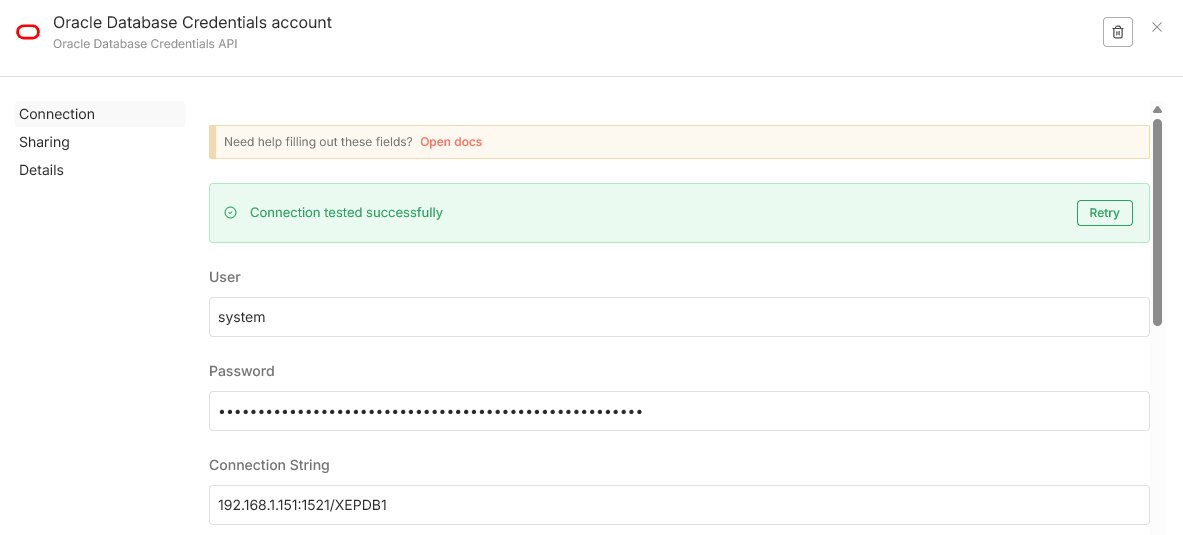
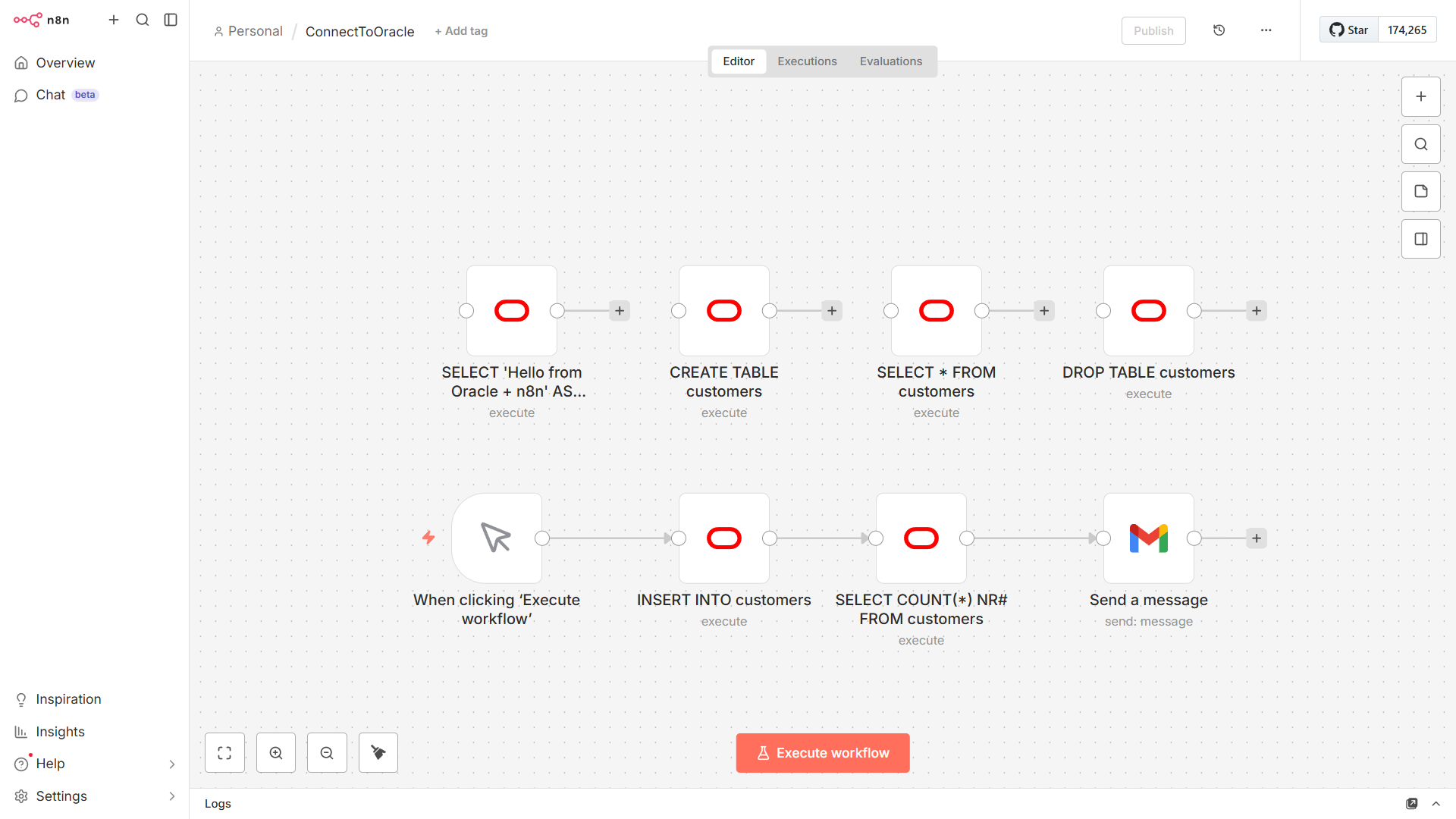
Freitag, Februar 13th, 2026AI Workflow Automation N8N 2.6.4 – how to create workflows that connect to Oracle databases
Donnerstag, Februar 12th, 2026
SELECT ‚Hello from Oracle + n8n‘ AS message FROM dual
CREATE TABLE customers (
customer_id NUMBER GENERATED BY DEFAULT AS IDENTITY PRIMARY KEY,
first_name VARCHAR2(50),
last_name VARCHAR2(50),
email VARCHAR2(100),
created_date TIMESTAMP DEFAULT CURRENT_TIMESTAMP,
status VARCHAR2(20),
total_orders NUMBER DEFAULT 0,
last_purchase_date TIMESTAMP
)
INSERT INTO customers (first_name, last_name, email, created_date, status, total_orders,
last_purchase_date)
VALUES (‚John‘,’Doe‘,’john.doe@email.com‘,SYSTIMESTAMP – INTERVAL ’90‘
DAY(3),’active‘,15,SYSTIMESTAMP – INTERVAL ‚5‘ DAY(3))
SELECT * FROM customers
DELETE FROM customers
DROP TABLE customers
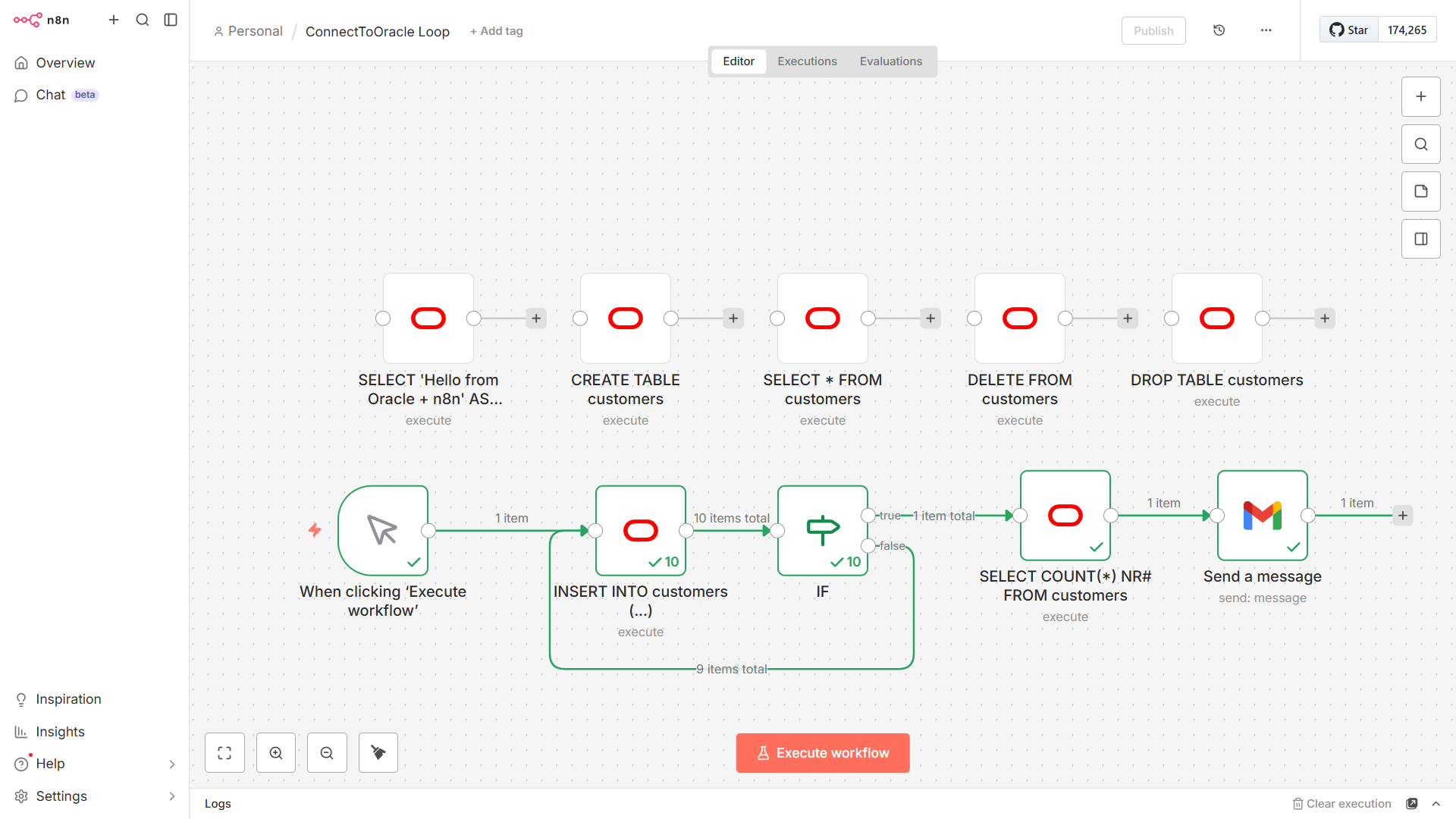
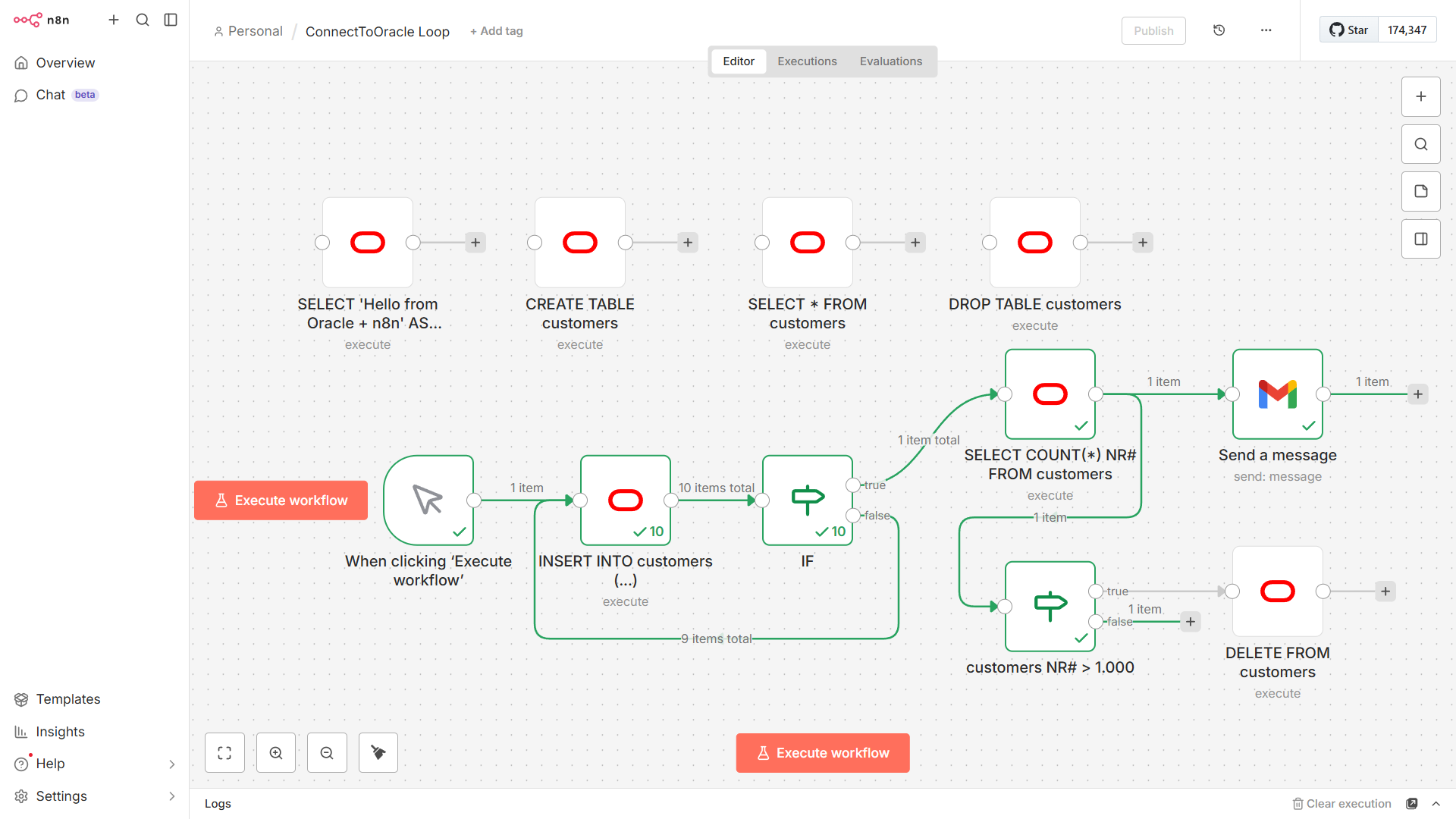
Looping with the IF Node – to run only a number of times you can add a code node into your loop

In Oracle ending a query with a semicolon inside a client application like n8n often triggers the „ORA-00933: SQL command not properly ended“ error
The Fix – simply delete the ‚;‚ at the end of your SQL statement in the Oracle Database node
Wrong: SELECT * FROM users;
Right: SELECT * FROM users
Why this happens – in n8n the SQL is sent via a driver (like node-oracledb) and drivers treat the semicolon as a statement terminator for scripts but when sending a single command via an API the semicolon is seen as an illegal character within the command itself
Oracle’s documentation classifies this as an invalid character (ORA-00911) or an improperly ended command (ORA-00933)